


Poco X8 Pro 5G
KSh 63,000.00
4K 60fps with OIS, 960fps slow motion, 100W charging to full in 48 minutes and a 3,500 nit Dolby Vision display, on a Dimensity 8500 Ultra.
Key Features and Specifications
- Display: 6.59-inch AMOLED, 1268 x 2756 pixels, 19.5:9 ratio, about 460 ppi
- Chipset: MediaTek Dimensity 8500 Ultra (4 nm)
- Memory and Storage: 256GB with 8GB RAM
- Rear Camera: 50MP wide, f/1.5, 26mm, 1/1.95 inch, 0.8 micron, PDAF, OIS
- Video Recording: 4K at 30 and 60fps, rear camera
Please Note: We do NOT do Lipa Pole Pole. Thank you
Poco X8 Pro 5G
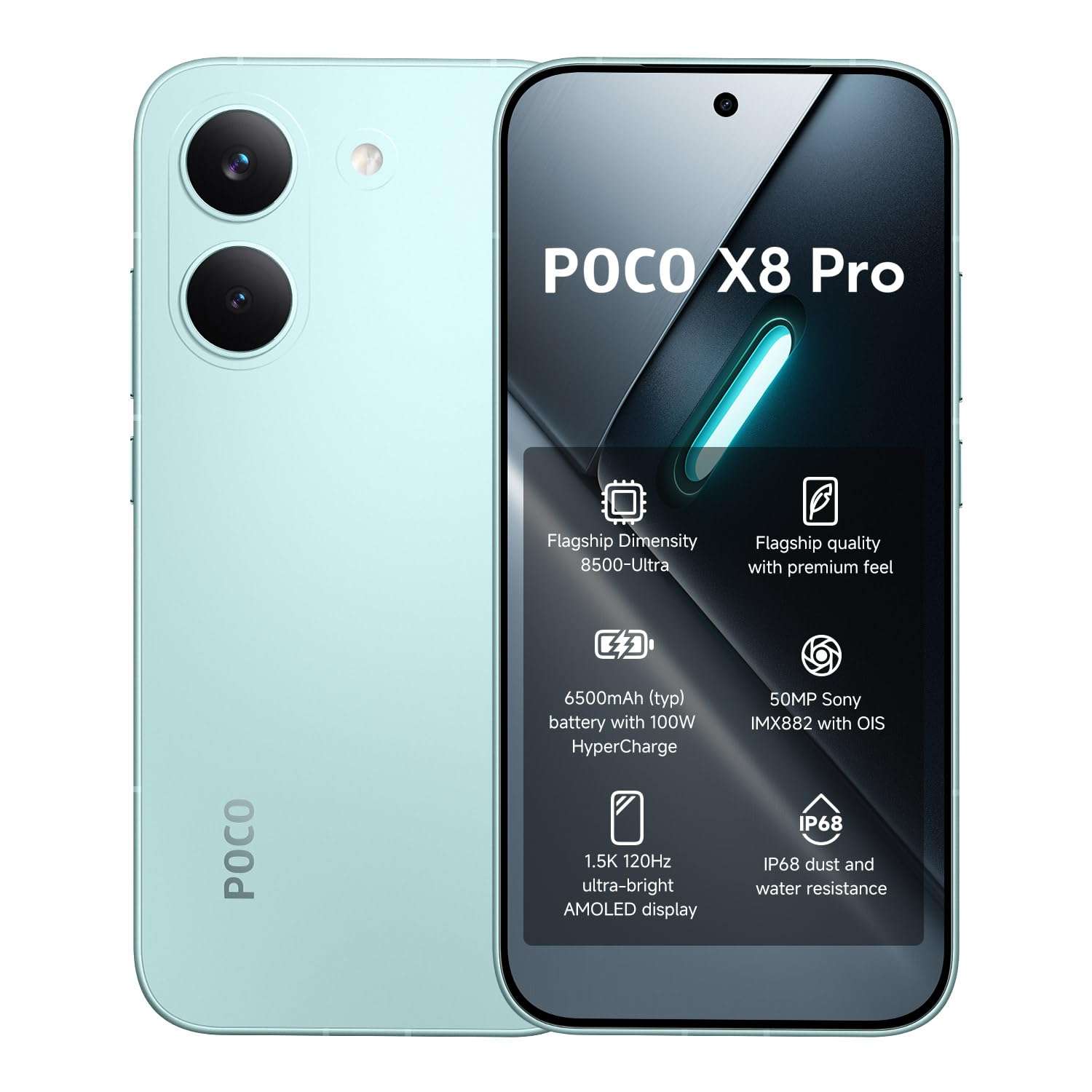
The Poco X8 Pro 5G is available at City Hub Electronics, Nairobi. It is the direct successor to the Poco X7 Pro and the global version of the China-only Redmi Turbo 5. For creators it is one of the strongest value propositions in the catalogue: 4K at 60fps with optical stabilisation, slow motion to 960fps, and a 6,500 mAh battery that charges completely in under 50 minutes.
Camera
The main camera is a 50MP wide at f/1.5 and 26mm on a 1/1.95 inch sensor with 0.8 micron pixels, with phase detection autofocus and optical image stabilisation. The f/1.5 aperture is the widest in this bracket and gathers noticeably more light than the f/1.8 lenses it competes against.
Optical stabilisation is the specification that separates this from most phones near its price, including the Poco M8. It is worth two to three stops in low light and is what makes handheld video usable without a gimbal.
The second lens is an 8MP ultrawide at f/2.2 and 15mm on a small 1/4.0 inch sensor with 1.12 micron pixels. Be straight with customers here: it is a daylight lens. On a sensor this small, low light performance drops off sharply, and cutting between it and the main camera will show a visible difference in quality.
There is no telephoto lens, so reach beyond the wide is digital crop. The camera hardware is unchanged from the Poco X7 Pro, which is the one area where this generation did not move forward.
The front camera is a 20MP f/2.2 Quad-Bayer unit on a 1/4 inch sensor.
Video Recording
Resolutions and Frame Rates
The rear camera records 4K at 30 and 60fps, and 1080p at 30, 60, 120, 240 and 960fps. That frame rate ladder is unusually complete
4K at 60fps is the headline. It gives smooth motion for delivery and, more usefully, a 2.5x conform against a 24fps timeline, so a single 4K60 clip serves both as normal-speed coverage and as a subtle slow motion insert.
The 960fps mode at 1080p is a genuine super slow motion tool, giving a 32x conform against 30fps. Used sparingly it is a strong differentiator for product and sports content.
The front camera records only 1080p at 30 and 60fps. If you shoot a lot of pieces to camera, that is the clearest limitation on this phone, and the Infinix Note 60 Pro records 4K on both cameras instead.
Stabilisation
Optical image stabilisation on the 50MP main camera works together with gyroscope-driven electronic stabilisation. The combination handles walking and follow shots at 4K well, which is not something most phones at this level manage.
The 8MP ultrawide is not optically stabilised and relies on electronic correction alone.
Because 4K capture leaves crop headroom, there is room to stabilise or reframe further in post while still delivering a clean 1080p master.
Colour and Dynamic Range
Recording supports HDR10+. The display is a 6.59-inch AMOLED with Dolby Vision and HDR10+ support, 12-bit colour depth, 2,000 nits in high brightness mode and 3,500 nits peak.
Dolby Vision playback on a panel this bright means you can review HDR footage properly on location rather than waiting to get back to a monitor, and 3,500 nits makes judging exposure in direct sun straightforward.
Capture itself is a conventional 8-bit pipeline with no log option, so grading latitude is limited compared with a flagship. Set exposure carefully at capture.
Power
A 6,500 mAh battery powers the X8 Pro, well above what most phones this thin carry.
Charging is the standout: 100W wired with PD3.0 and PPS support, reaching a full charge in about 48 minutes. Very few phones at any price charge a cell this large that quickly.
Reverse wired charging runs at 27W, which is high enough to usefully charge a second phone, a camera battery or a portable light rather than just topping up earbuds. On a shoot, that turns the X8 Pro into a power bank that also happens to be your camera.
Storage
Three configurations are offered: 256GB with 8GB of RAM, 512GB with 8GB of RAM, and 512GB with 12GB of RAM, all on UFS 4.1 with LPDDR5X memory.
UFS 4.1 is flagship-grade storage and is what allows sustained 4K 60fps and 960fps slow motion writes without dropped frames. It is a significant step above the UFS 2.2 in the Poco M8 and the UFS 2.2 in the Infinix Note 60 Pro.
There is no microSD card slot, unlike the Poco M8. Combined with 4K 60fps capture, that ma. Offloading runs over USB-C 2.0, which is slower than the storage deserves.
Editing
The MediaTek Dimensity 8500 Ultra on a 4 nm process with a Mali-G720 MC8 GPU is meaningfully faster than the previous generation Dimensity 8400 Ultra, and a 3D dual-layer IceLoop cooling system keeps it from throttling during sustained work.
Combined with LPDDR5X memory and UFS 4.1 storage, on-device 4K editing is genuinely practical here rather than merely possible.
The phone runs HyperOS 3 on Android 16. The 6.59-inch panel is compact for editing but its brightness and colour accuracy make up
Audio
Stereo speakers with Dolby Atmos handle playback, and the phone supports 24-bit 192kHz Hi-Res audio as well as Hi-Res wireless audio, so it does justice to good wireless headphones.
Bluetooth 6.0 with aptX HD, LHDC 5 and Auracast is a strong wireless audio specification at this price and pairs well with the JBL and HiFuture lines in the catalogue.
There is no 3.5mm jack. External microphones connect over USB-C 2.0 with OTG support. As with every phone at this level, a wireless lavalier is the single biggest improvement you can make to dialogue quality.
Design and Build
The Poco X8 Pro measures 157.5 x 75.2 x 8.4 mm and weighs about 201.5 g. Note that GSMArena’s review unit is listed slightly differently at 8.2mm and 204 g, so treat these figures as approximate until a retail unit is measured.
The front is Corning Gorilla Glass 7i over an aluminium frame, a more substantial construction than the plastic body of the Poco M8.
Ingress protection is rated IP68 and IP69K: dust tight, resistant to high pressure water jets and immersible up to 1.5 metres for 30 minutes. The IP69K portion is market and region dependent, so confirm the rating on the units your supplier is shipping.
The display is a 6.59-inch AMOLED at 1268 x 2756 in a 19.5:9 ratio, roughly 460 ppi, at 120Hz with 3840Hz PWM dimming, Dolby Vision and HDR10+ support, 12-bit colour, 2,000 nits in high brightness mode and 3,500 nits peak, under Gorilla Glass 7i.
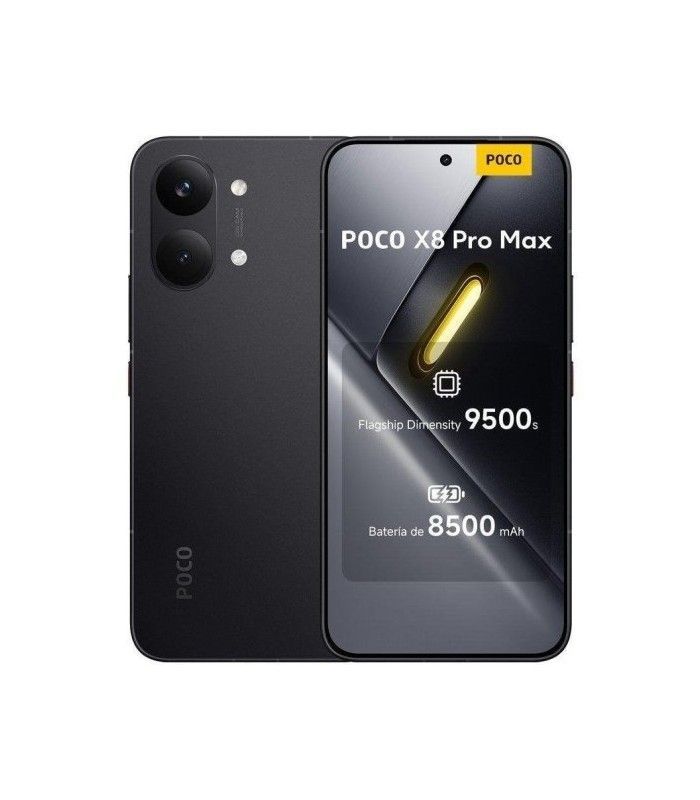
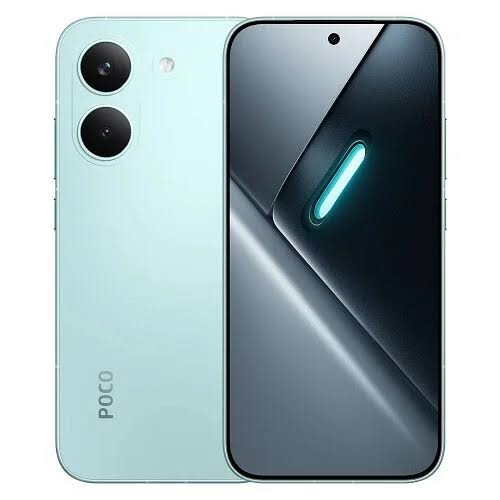
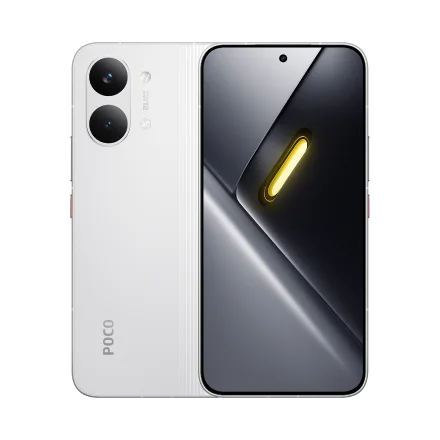
An Iron Man Edition is produced in some markets with a black finish and a redesigned box and case. Standard colour options are Black, White and Mint Green.
Specifications
| Specification | Poco X8 Pro 5G |
|---|---|
| Display |
|
| Chipset |
|
| Memory and Storage |
|
| Rear Camera |
|
| Video Recording |
|
| Front Camera |
|
| Battery and Charging |
|
| Operating System |
|
| Connectivity |
|
| Build and Protection |
|
| Colours |
|
Buy the Poco X8 Pro 5G at City Hub Electronics.